When you think of Italian food, the first ingredient that comes to mind is the tomato. But did you know that tomatoes aren’t originally from Italy?
In fact, it is quite a newcomer to Italian food as far as history goes. The tomato, pomodoro, only became a staple in Italian cooking in the late 19th century. Up until then, Italian dishes would have used olive oils, herbs, olives, anchovies, and cheeses for dressings. Enter the pomodoro. I think it’s fair to say that once adopted into their cuisine, Italians mastered the tomato sauce! Today, canning tomatoes is a yearly tradition for many Italian families. This tradition is passed down from nonna to mamma to us!
We’ll show you step-by-step how to can tomatoes at home, just like our families still do in Italy and here in Canada. From choosing the best tomatoes to preparing jars. Then, follow three classic methods—tomato puree, pezzi (pieces with skin on), or pelato (peeled and quartered tomatoes). You’ll learn how to preserve tomatoes for pizza, pasta, and hearty meat dishes all year long.
Canning tomatoes starts with beautiful red, ripe tomatoes! There are thousands of types of tomato varieties out there. I’m sure you can make a great sauce with them. However, talk to any Italian and you’ll find that the tomato of choice, tried, tested, and true, is the roma tomato. There are different types of romas as well, but stay within this variety and you’ll be ok:)
As you travel through Italy, heck sometimes just between towns, ways of doing things change- sometimes just slightly and sometimes completely different. We’ll start with the way I was taught. Well, cause it’s the right way! Hahaha! Just kidding. That is what every Italian will tell you so I had to say it:) Any of these ways will do. Ultimately, it comes down to preference I guess.
Preparing Tomatoes for Canning
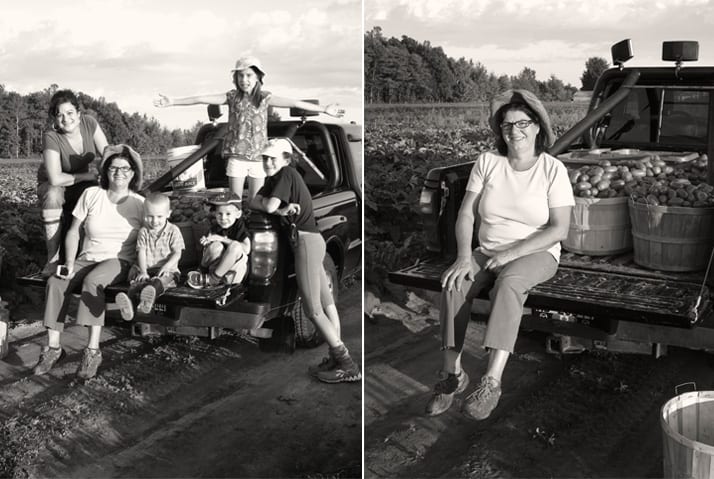
It always starts out the same. Buy or pick your tomatoes and then if possible lay them out in a single layer (on clean cardboard or wood, on a garage or basement floor) for a few days. This ensures they are nice and ripe. If you don’t have floor space, just leave them in the bushels for a couple of days. When they are ready to process, you need to prepare your jars. Ensure they and the lids are clean and properly sterilized. Wash your tomatoes very well – this is very important! Large containers make the job easier. Not just a rinse, give them a good primary wash. Then transfer them to another container for a final wash.
Now here is where we go in different directions.
Method 1: Classic Italian Tomato Puree (Passata)
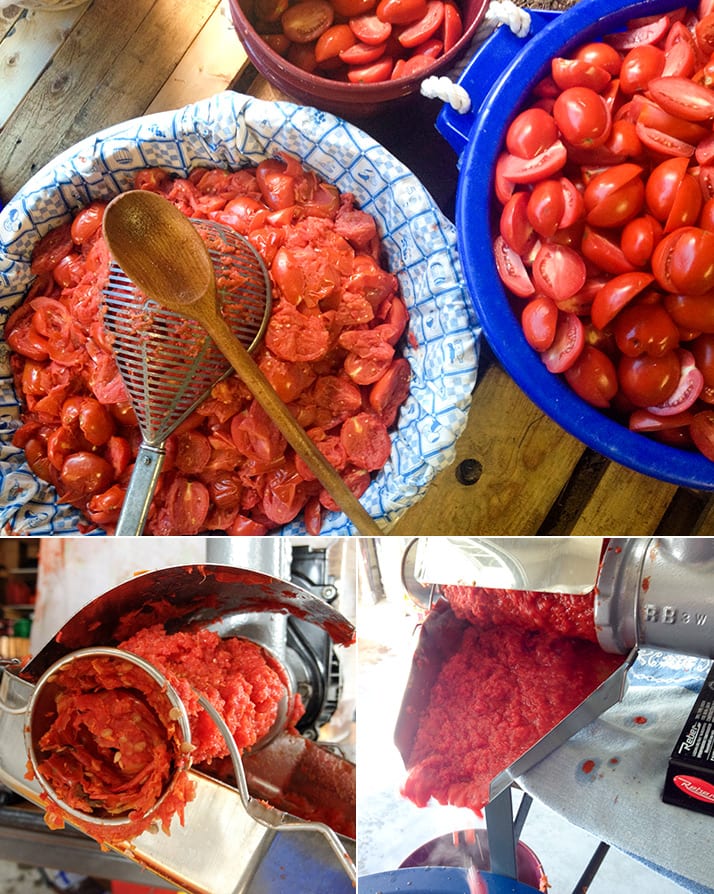
Cut off any bad spots, remove the top where the stem was, and then cut the tomatoes in half. Bring a large pot (size depends on how many tomatoes you are processing) with a couple inches of water to a boil. Add your cut tomatoes to fill the pot 3/4 way. Bring to a slow boil and continue to simmer for 15 minutes until the skin is nice and tender, stirring often. Transfer to a wicker basket covered with a clean tablecloth. Let them strain for another 10-15 minutes. From here, they go into the tomato grinder, manual or automatic. And yes, we used to do this all with a hand crank grinder! It’s fine if you’re doing small batches. Yet, if you plan on doing many bushels each year – trust me – it’s worth the investment in a good electric tomato grinder! Once grinding is done, put the skins extracted by the grinder through one time. This extracts the remaining sauce (the seeds will get extracted by the grinder). Place lids in boiling water following proper sterilization technique. Prepare empty sterilized jars for filling. Place 3-4 washed basil leaves in the bottom of each jar. Fill with the tomato puree (leave 1/2 inch at the top). Put sterilized lids on the jars, tighten well, and place filled jars in a large processing pot/barrel. Fill with water so jars are submerged and bring to a boil for 20 minutes. Remove jars when water cools a bit and store for future use. Check that the jars are sealed before storing.
Method 2: Raw Tomato Puree
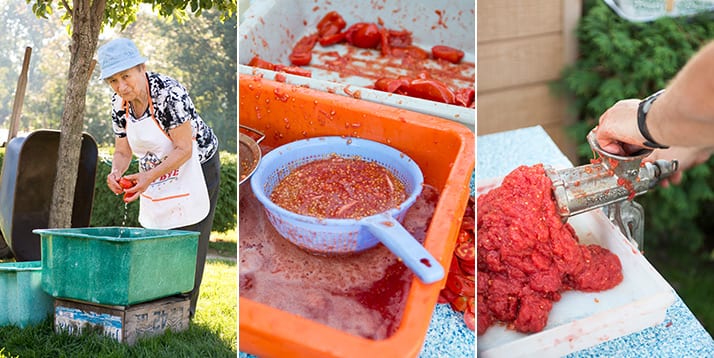
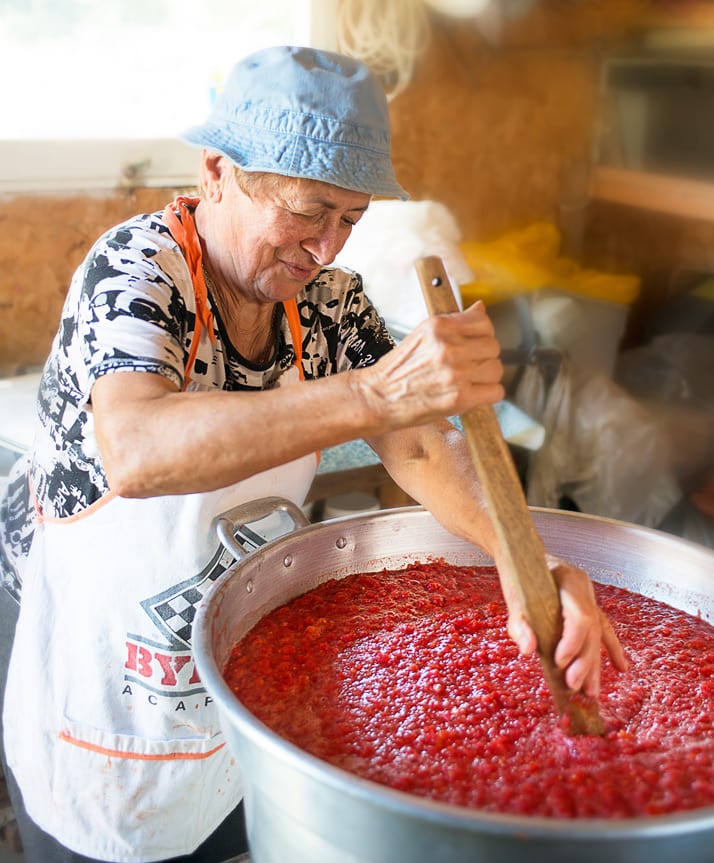
Cut off the tops of the tomatoes and any bad spots. Cut them in half and remove the seeds with your fingers. Put raw tomato pieces through a meat grinder, skins and all. Transfer tomato puree to a large pot, bring to a boil and continue for another 60 minutes. Place 3-4 basil leaves in the bottom of sterilized jars. Then fill with the hot puree (leave about 1/2 inch at the top). Put sterilized lids on and carefully transfer to a container for cooling process. Cover with blankets as they cool. Check that the seal has taken before storing away. If you have lots of tomatoes to preserve, some extra hands make lighter work and good company:)
Method 3: Pezzi and Pelati (Pieces and Peeled Tomatoes)
If you don’t have a grinder and just want a super simple way to add canned tomatoes to your pantry here are two great ways to preserve tomatoes.
‘Pezzi’ and ‘Pelato’ (pieces and peeled) aren’t a pureed sauce but are another very common tomato preserve used in a variety of dishes. You can easily puree them in a blender to make sauce as well. For pezzi, or pieces, simply cut the tops off of the cleaned tomatoes and cut lengthwise into four pieces. Stuff them tightly into clean and sterilized jars. Seal with sterilized lids and process in a canning bath for 20 minutes.
For pelato, bring a large pot of water to a boil. Place a small amount of tomatoes in at a time for about a minute or just long enough that the skins come off easily. Peel, cut off tops, and cut into 4 pieces lengthwise. Stuff into clean and sterilized jars. Seal with sterilized lids and process in a canning bath for 20 minutes.
Tomatoes preserved this way are excellent when making pizza or adding to meat dishes. My one piece of advice when doing it either of these ways is to let them drain well before putting in jars so you don’t end up with jars half-filled with water.